TMG Powder 50 G Powder
Trimethylglycine (TMG) is also called glycine betaine, but the name trimethylglycine signifies that it has three methyl groups attached to each molecule of glycine. TMG was discovered to be beneficial to heart health back in the 1950s. TMG operates along a pathway similar to that of vitamin B12. It is a “methyl donor,” providing extra methyl groups to hasten the conversion of homocysteine back to methionine. When a TMG methyl group is donated to a molecule of homocysteine, it converts to the non-toxic amino acid, methionine. Research showing TMG’s ability to promote healthy levels of homocysteine, alone or in conjunction with other nutrients, confirms its status as an important nutrient for cardiovascular health. For example, in a recent cross-sectional survey study, participants who consumed >360 mg/d of TMG had, on average, 10% lower concentrations of homocysteine and 19% lower concentrations of C-reactive protein than those participants who consumed <260 mg/d.163
Product Information
Product Information
Shipping & Returns
Shipping & Returns

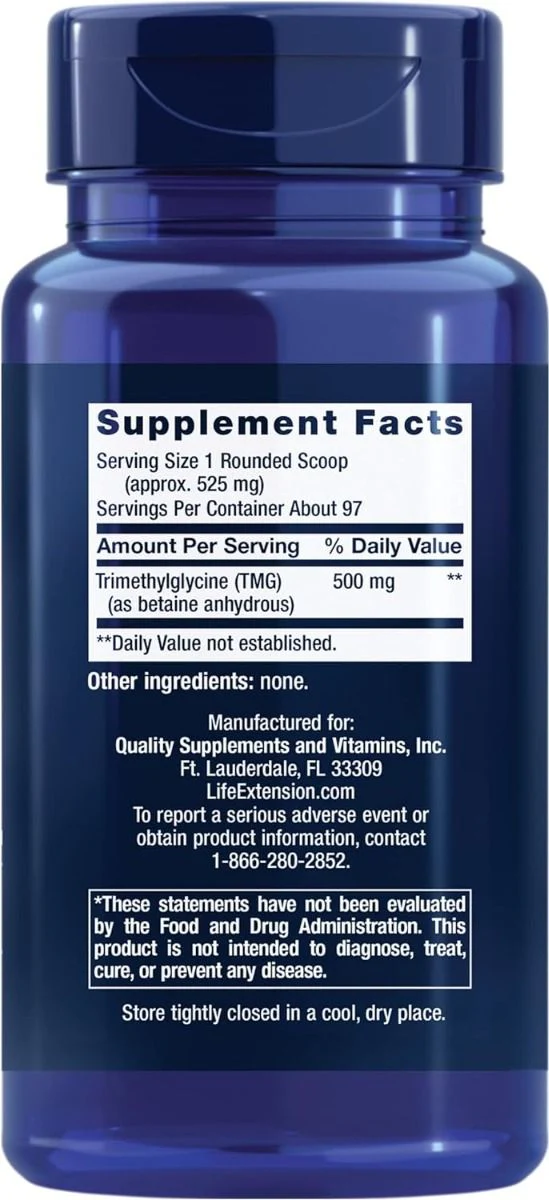


TMG Powder 50 G Powder
TMG Powder 50 G Powder
Trimethylglycine (TMG) is also called glycine betaine, but the name trimethylglycine signifies that it has three methyl groups attached to each molecule of glycine. TMG was discovered to be beneficial to heart health back in the 1950s. TMG operates along a pathway similar to that of vitamin B12. It is a “methyl donor,” providing extra methyl groups to hasten the conversion of homocysteine back to methionine. When a TMG methyl group is donated to a molecule of homocysteine, it converts to the non-toxic amino acid, methionine. Research showing TMG’s ability to promote healthy levels of homocysteine, alone or in conjunction with other nutrients, confirms its status as an important nutrient for cardiovascular health. For example, in a recent cross-sectional survey study, participants who consumed >360 mg/d of TMG had, on average, 10% lower concentrations of homocysteine and 19% lower concentrations of C-reactive protein than those participants who consumed <260 mg/d.163
Product Information
Product Information
Shipping & Returns
Shipping & Returns
Description
Trimethylglycine (TMG) is also called glycine betaine, but the name trimethylglycine signifies that it has three methyl groups attached to each molecule of glycine. TMG was discovered to be beneficial to heart health back in the 1950s. TMG operates along a pathway similar to that of vitamin B12. It is a “methyl donor,” providing extra methyl groups to hasten the conversion of homocysteine back to methionine. When a TMG methyl group is donated to a molecule of homocysteine, it converts to the non-toxic amino acid, methionine. Research showing TMG’s ability to promote healthy levels of homocysteine, alone or in conjunction with other nutrients, confirms its status as an important nutrient for cardiovascular health. For example, in a recent cross-sectional survey study, participants who consumed >360 mg/d of TMG had, on average, 10% lower concentrations of homocysteine and 19% lower concentrations of C-reactive protein than those participants who consumed <260 mg/d.163