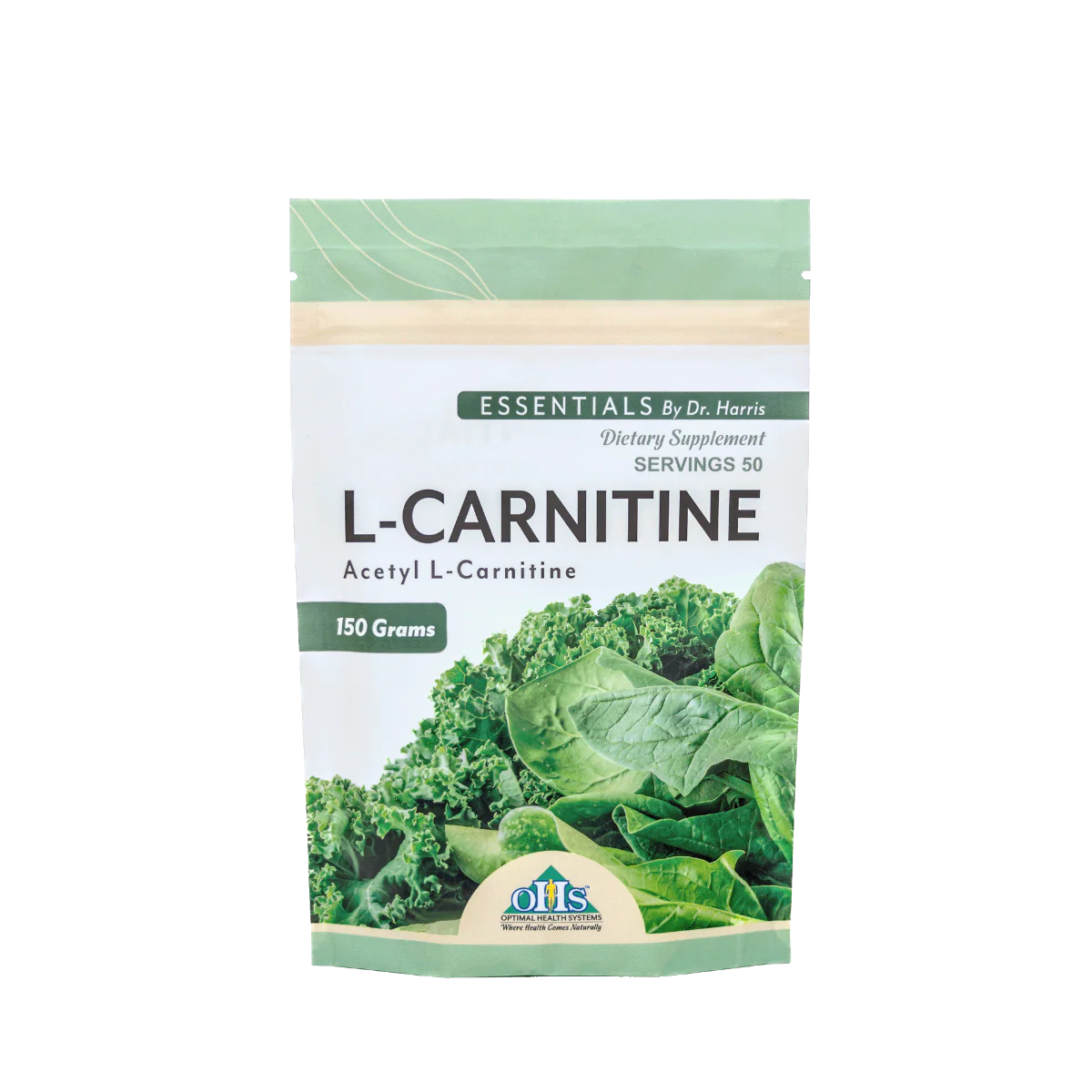
Essential L-Carnitine 150g Powder
Encourages the body to use fat as fuel
Helps support mitochondrial health
Supports a boost in energy levels
May contribute to heart health improvement
Carnitine has been studied extensively because it is important to energy production and is a well-tolerated and generally safe therapeutic agent. Researchers prefer to study acetyl-L-carnitine because it is better absorbed in the small intestine than other forms, and more efficiently crosses the blood-brain barrier.
Carnitine is found in almost every last cell in your body and it plays a critical role in energy production by transporting fatty acids to mitochondria, where they’re converted to energy. Carnitine also plays a role in helping remove toxins from cells.
You mainly find dietary carnitine in meat, fish, poultry and dairy, especially red meat. For vegetarians and those who avoid red meat, along with those genetically predisposed to not using certain fats for energy, it can be easy to grow deficient in carnitine. There are also preexisting health conditions that can create cause it as well:
Liver disease
Kidney disease, especially with dialysis
Digestive disease that causes poor absorption
Malnutrition
Mitochondrial disease
Certain metabolic disorders
Certain medicines, such as valproate
Ultimately, a deficiency leads to a condition where nutrients can’t reach your body’s cells, causing weakness and potentially heart and living problems.
Signs of a Carnitine Deficiency:
Decreased or floppy muscle tone or muscle weakness
Tiredness/Fatigue
Irritability
Inability to lose body fat
Product Information
Product Information
Shipping & Returns
Shipping & Returns
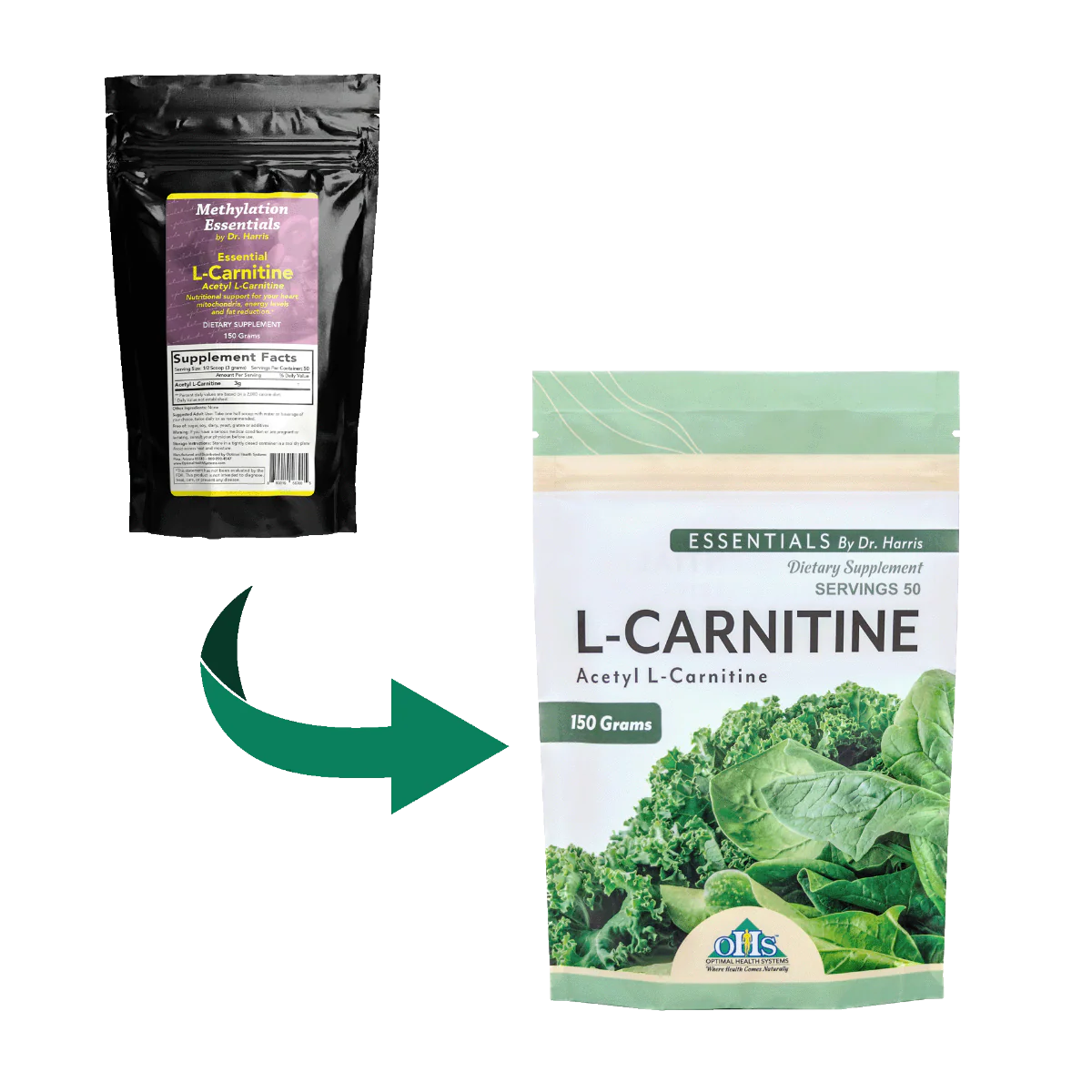
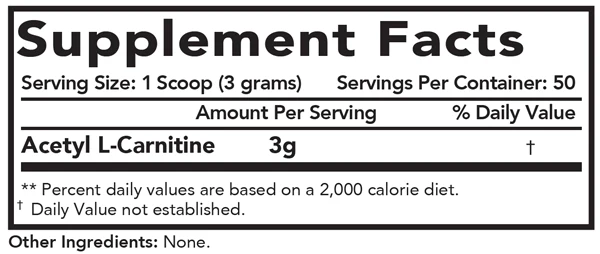
Essential L-Carnitine 150g Powder
Essential L-Carnitine 150g Powder
Encourages the body to use fat as fuel
Helps support mitochondrial health
Supports a boost in energy levels
May contribute to heart health improvement
Carnitine has been studied extensively because it is important to energy production and is a well-tolerated and generally safe therapeutic agent. Researchers prefer to study acetyl-L-carnitine because it is better absorbed in the small intestine than other forms, and more efficiently crosses the blood-brain barrier.
Carnitine is found in almost every last cell in your body and it plays a critical role in energy production by transporting fatty acids to mitochondria, where they’re converted to energy. Carnitine also plays a role in helping remove toxins from cells.
You mainly find dietary carnitine in meat, fish, poultry and dairy, especially red meat. For vegetarians and those who avoid red meat, along with those genetically predisposed to not using certain fats for energy, it can be easy to grow deficient in carnitine. There are also preexisting health conditions that can create cause it as well:
Liver disease
Kidney disease, especially with dialysis
Digestive disease that causes poor absorption
Malnutrition
Mitochondrial disease
Certain metabolic disorders
Certain medicines, such as valproate
Ultimately, a deficiency leads to a condition where nutrients can’t reach your body’s cells, causing weakness and potentially heart and living problems.
Signs of a Carnitine Deficiency:
Decreased or floppy muscle tone or muscle weakness
Tiredness/Fatigue
Irritability
Inability to lose body fat
Product Information
Product Information
Shipping & Returns
Shipping & Returns
Description
Encourages the body to use fat as fuel
Helps support mitochondrial health
Supports a boost in energy levels
May contribute to heart health improvement
Carnitine has been studied extensively because it is important to energy production and is a well-tolerated and generally safe therapeutic agent. Researchers prefer to study acetyl-L-carnitine because it is better absorbed in the small intestine than other forms, and more efficiently crosses the blood-brain barrier.
Carnitine is found in almost every last cell in your body and it plays a critical role in energy production by transporting fatty acids to mitochondria, where they’re converted to energy. Carnitine also plays a role in helping remove toxins from cells.
You mainly find dietary carnitine in meat, fish, poultry and dairy, especially red meat. For vegetarians and those who avoid red meat, along with those genetically predisposed to not using certain fats for energy, it can be easy to grow deficient in carnitine. There are also preexisting health conditions that can create cause it as well:
Liver disease
Kidney disease, especially with dialysis
Digestive disease that causes poor absorption
Malnutrition
Mitochondrial disease
Certain metabolic disorders
Certain medicines, such as valproate
Ultimately, a deficiency leads to a condition where nutrients can’t reach your body’s cells, causing weakness and potentially heart and living problems.
Signs of a Carnitine Deficiency:
Decreased or floppy muscle tone or muscle weakness
Tiredness/Fatigue
Irritability
Inability to lose body fat