Calcium K/D 180 Veggie Caps
Calcium K/D combines di-calcium malate with vitamins D and K for optimal bone support and reduces the risk of osteoporosis. Di-calcium malate provides a high percentage of elemental calcium, fully chelated with the Krebs cycle intermediate malate for optimal absorption. Vitamin D promotes intestinal calcium absorption and reduces urinary calcium loss. A 7-year study involving over 30,000 women indicates that combined calcium and vitamin D supplementation promotes healthy hip bones. Vitamin K enhances bone formation by carboxylating osteocalcin. This enables osteocalcin to bind to calcium and promote healthy bone mineralization. Adequate intake of vitamin K1 and K2 may be especially important for optimal carboxylation in aging individuals. By activating matrix Gla-protein (MGP), vitamin K also helps maintain healthy calcium metabolism in vascular tissues, supporting healthy vascular elasticity.
Calcium K/D combines calcium with vitamins K and D to support bone and cardiovascular health
Risk factors for osteoporosis include sex, race, age and inadequate calcium intake. Populations at highest risk for osteoporosis include Caucasian, Asian, postmenopausal women, and elderly women and men. Adequate calcium intake throughout life is linked to a reduced risk of osteoporosis, as calcium helps to optimize peak bone mass during adolescence and early adulthood in conjunction with exercise and healthy diet. Calcium intake greater than 2,000 mg per day has no further known benefit to bone health.
Product Information
Product Information
Shipping & Returns
Shipping & Returns
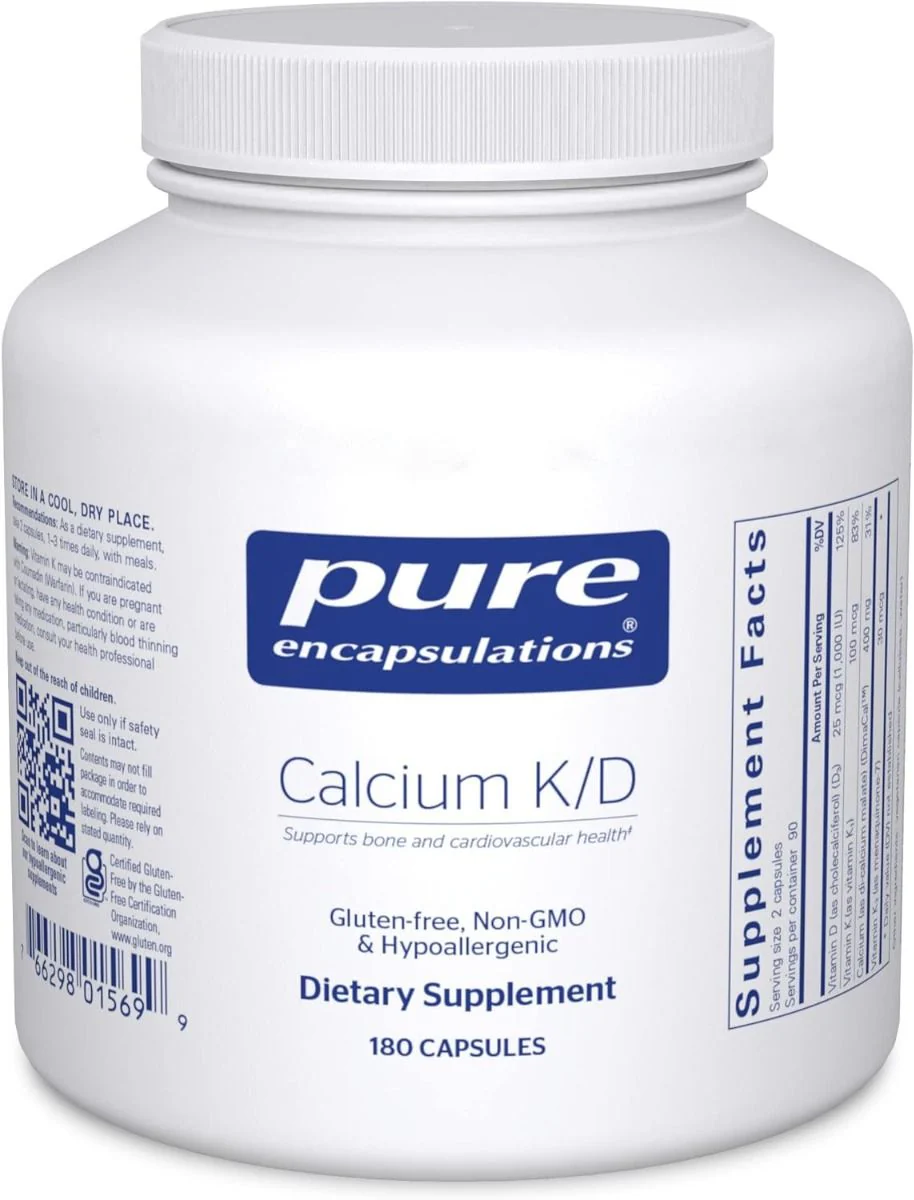



Calcium K/D 180 Veggie Caps
Calcium K/D 180 Veggie Caps
Calcium K/D combines di-calcium malate with vitamins D and K for optimal bone support and reduces the risk of osteoporosis. Di-calcium malate provides a high percentage of elemental calcium, fully chelated with the Krebs cycle intermediate malate for optimal absorption. Vitamin D promotes intestinal calcium absorption and reduces urinary calcium loss. A 7-year study involving over 30,000 women indicates that combined calcium and vitamin D supplementation promotes healthy hip bones. Vitamin K enhances bone formation by carboxylating osteocalcin. This enables osteocalcin to bind to calcium and promote healthy bone mineralization. Adequate intake of vitamin K1 and K2 may be especially important for optimal carboxylation in aging individuals. By activating matrix Gla-protein (MGP), vitamin K also helps maintain healthy calcium metabolism in vascular tissues, supporting healthy vascular elasticity.
Calcium K/D combines calcium with vitamins K and D to support bone and cardiovascular health
Risk factors for osteoporosis include sex, race, age and inadequate calcium intake. Populations at highest risk for osteoporosis include Caucasian, Asian, postmenopausal women, and elderly women and men. Adequate calcium intake throughout life is linked to a reduced risk of osteoporosis, as calcium helps to optimize peak bone mass during adolescence and early adulthood in conjunction with exercise and healthy diet. Calcium intake greater than 2,000 mg per day has no further known benefit to bone health.
Original: $40.00
-65%$40.00
$14.00Product Information
Product Information
Shipping & Returns
Shipping & Returns
Description
Calcium K/D combines di-calcium malate with vitamins D and K for optimal bone support and reduces the risk of osteoporosis. Di-calcium malate provides a high percentage of elemental calcium, fully chelated with the Krebs cycle intermediate malate for optimal absorption. Vitamin D promotes intestinal calcium absorption and reduces urinary calcium loss. A 7-year study involving over 30,000 women indicates that combined calcium and vitamin D supplementation promotes healthy hip bones. Vitamin K enhances bone formation by carboxylating osteocalcin. This enables osteocalcin to bind to calcium and promote healthy bone mineralization. Adequate intake of vitamin K1 and K2 may be especially important for optimal carboxylation in aging individuals. By activating matrix Gla-protein (MGP), vitamin K also helps maintain healthy calcium metabolism in vascular tissues, supporting healthy vascular elasticity.
Calcium K/D combines calcium with vitamins K and D to support bone and cardiovascular health
Risk factors for osteoporosis include sex, race, age and inadequate calcium intake. Populations at highest risk for osteoporosis include Caucasian, Asian, postmenopausal women, and elderly women and men. Adequate calcium intake throughout life is linked to a reduced risk of osteoporosis, as calcium helps to optimize peak bone mass during adolescence and early adulthood in conjunction with exercise and healthy diet. Calcium intake greater than 2,000 mg per day has no further known benefit to bone health.